
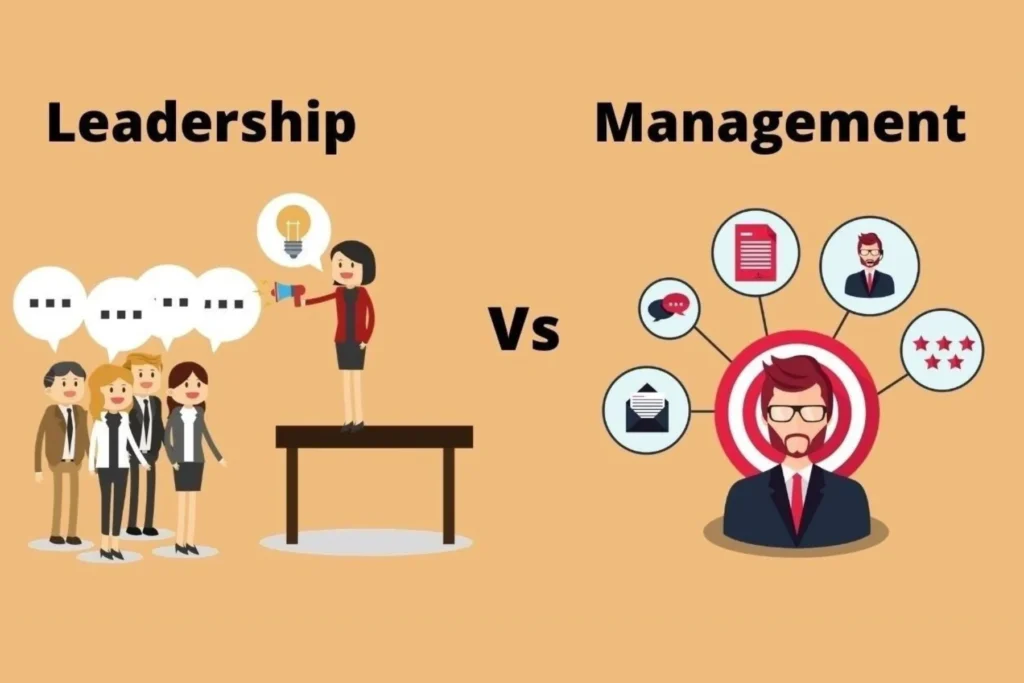
In many organisations, the words manager and leader are used as if they mean the same thing.
They don’t.
Not because one is better than the other, but because they focus on different responsibilities.
Management is about making sure work gets done well.
Leadership is about making sure the work being done actually matters.
Both are important.
Both are necessary.
Strong organisations need reliable management and thoughtful leadership. The key is understanding how they differ, and when each is required.
This balance between both is the foundation of effective leadership management.
Let’s look at the difference more closely.
A manager focuses on execution.
They track deadlines, monitor deliverables, solve day-to-day problems, and make sure tasks move forward. Their work keeps operations steady and organised.
This is essential. Without execution, nothing moves.
A leader focuses on direction.
They ask:
Managers improve how work gets done.
Leaders examine whether the work itself still makes sense.
If there is leadership without management, ideas may never turn into results.
If there is management without leadership, teams may work hard but move in the wrong direction.
Both roles support each other.
Managers work within formal authority.
Their role allows them to assign tasks, set deadlines, and evaluate performance. This structure creates accountability and clarity.
Leaders go beyond authority.
They build influence.
People follow them not just because of their title, but because they trust their judgment. That trust grows through:
Managers communicate what needs to be done.
Leaders explain why it matters.
Authority creates compliance.
Influence builds commitment.
An organisation needs both.
Many managers are promoted because they are strong problem-solvers.
They think quickly, step in when issues arise, and provide solutions. This keeps work moving and prevents delays.
But as responsibility grows, constantly solving problems yourself can limit team growth.
Leaders focus on building capability.
Instead of always giving answers, they:
Managers fix today’s problems.
Leaders prepare people to solve tomorrow’s problems.
Solving issues keeps performance stable.
Developing people keeps performance growing.
Managers focus on measurable results.
They track KPIs, productivity, budgets, and targets. When performance drops, they step in to correct it.
This keeps standards clear.
Leaders focus on culture.
They shape:
Performance numbers show what is happening.
Culture explains why it is happening.
Managers respond to results.
Leaders shape the environment that produces those results.
Strong organisations pay attention to both.
Managers protect stability.
They maintain systems, reduce risk, and ensure consistency. This creates reliability and trust.
Leaders prepare for the future.
They ask:
Too much focus on stability can slow innovation.
Too much focus on change can create confusion.
Sustainable organisations balance stability with progress.
This is not about choosing between manager and leader.
It is about understanding responsibility.
Management ensures work is done properly.
Leadership growth ensures the organisation stays relevant and grows stronger.
Most professionals begin by developing strong management skills. As their role expands, their thinking must expand as well.
You do not stop being a manager to become a leader.
You build on your management strengths and add perspective, influence, and long-term thinking.
Often, the shift begins with small changes:
In many cases, you are closer to leadership than you think.
It is not a complete transformation.
It is an expansion of responsibility.
Management keeps organisations running.
Leadership keeps organisations moving forward.
Both matter.
Both bring value.
And the strongest professionals learn how to operate in both roles when needed.
At Atlas Learning, we partner with organisations to build professionals who can manage effectively and lead strategically.
If your teams need both stability and direction, let’s connect.
Related Articles
We use cookies to understand how visitors use this site so we can improve it. You can accept or reject analytics cookies at any time. See our Privacy Policy. We use cookies to understand how visitors use this site so we can improve it. You can reject analytics cookies at any time. See our Privacy Policy.